Core Modernization: Bridging the Gap Between Legacy Systems and Future Needs
As organizations strive for growth and competitive advantage, the pressure to modernize core systems intensifies. The belief that core modernization is critical for achieving business objectives is widespread among IT leaders. This transformation isn’t just about updating technology; it’s about rethinking how businesses operate. Many companies find themselves caught between maintaining outdated infrastructures and the need to adopt new technologies. A firm’s ability to meet specific needs quickly is directly tied to the technology they use. In fact, a recent Forrester study found that 62% of respondents view core system modernization as the most critical element of their digital business strategies.
Legacy systemsis often costly and inefficient, impeding growth and lacking the flexibility needed to integrate new services quickly. This leaves organizations vulnerable to increased costs and risks. In contrast, modern systems enable organizations to deliver timely and tailored customer experiences, stay competitive, and minimize operational risks. However, with a thoughtful approach to core modernization, businesses can break free from these constraints, enhancing business performance and fostering agility.
With rising operational costs and increasing pressure from market disruptions, strategic investments in core modernization have become critical. A 2022 survey by a leading firm reveals that over 60% of companies that modernize their core systems see improvements in operational efficiency and cost reduction within two years. This highlights the tangible benefits of modernization and the risk of losing competitive edge for organizations that delay these necessary upgrades.
What is Core Modernization?
Core modernization refers to the process of upgrading IT applications and IT infrastructure, whether on-premise or in the cloud, to enable the delivery of advanced digital applications and align with modern business strategies. It involves transforming legacy systems into more flexible, efficient architectures, supporting innovation and real-time processing. This transformation extends beyond technology, impacting the entire organization—its people, processes, and culture.
As part of broader digital transformation initiatives, core modernization helps companies adapt to rapid technological changes and remain competitive. It often includes migrating legacy systems to cloud platforms, adopting modern development methods like DevOps, and integrating emerging technologies such as artificial intelligence and machine learning.
Why Modernize? Why Now?
Core modernization is no longer optional, especially in industries like banking. Legacy systems are holding businesses back from delivering personalized customer experiences and maintaining competitive service capabilities. These older systems are costly to maintain and limit agility, making it difficult to integrate with modern services and partners. Delaying modernization only compounds the problem, as the cost to sustain outdated technologies continues to rise, draining resources while competitors move ahead.
Business Benefits of Core Modernization
Modernizing legacy system structures enables businesses to meet stakeholder and customer needs more effectively. Beyond technology upgrades, core modernization drives improved performance, cost optimization, and long-term growth opportunities. The key benefits are as follows:
Simplify Legacy Systems
Legacy systems are complex and tightly integrated, making updates risky. Core modernization breaks these monoliths into manageable parts, allowing for targeted upgrades without disrupting overall stability, thus streamlining operations and reducing downtime.
Enable Cloud Deployment
Core modernization is crucial for organizations adopting cloud solutions. By updating infrastructure, businesses can utilize cloud benefits for scalability, flexibility, and faster deployment, enabling swift responses to market changes.
Enhance Operational Efficiency
Modernizing core systems boosts operational efficiency, increasing productivity and profitability. Streamlined processes reduce the time needed to deliver products and services, accelerating time to market.
Achieve Continuous Operations
Modern infrastructure supports 24/7 operations, allowing businesses to adapt quickly to customer needs. This agility is vital in sectors like retail and finance, where delays can harm customer satisfaction.
Seamless Legacy Migration
Core modernization facilitates the migration of legacy applications, integrating modern functionalities. This ensures businesses can adopt the latest features and remain competitive as requirements evolve.
Mitigate Risks
Legacy systems pose compliance and operational risks. Core modernization updates systems to current standards, reducing risks associated with outdated technology and decreasing management complexity.
Optimize Costs and Improve Predictability
Modernized systems enhance visibility into performance and costs, allowing better budget management. Businesses can shift from unpredictable capital expenses to manageable operating expenses, lowering overall maintenance costs.
New Revenue Opportunities
Core modernization enables new features, automated processes, and fosters innovative offerings, allowing businesses to appeal to new markets and enhance competitiveness through streamlined operations.
Align IT with Business Goals
Modernization of legacy systems ensures IT systems support business outcomes, accelerating digital transformation. It prepares organizations for future challenges, helping achieve strategic goals such as market expansion and improved customer experiences.
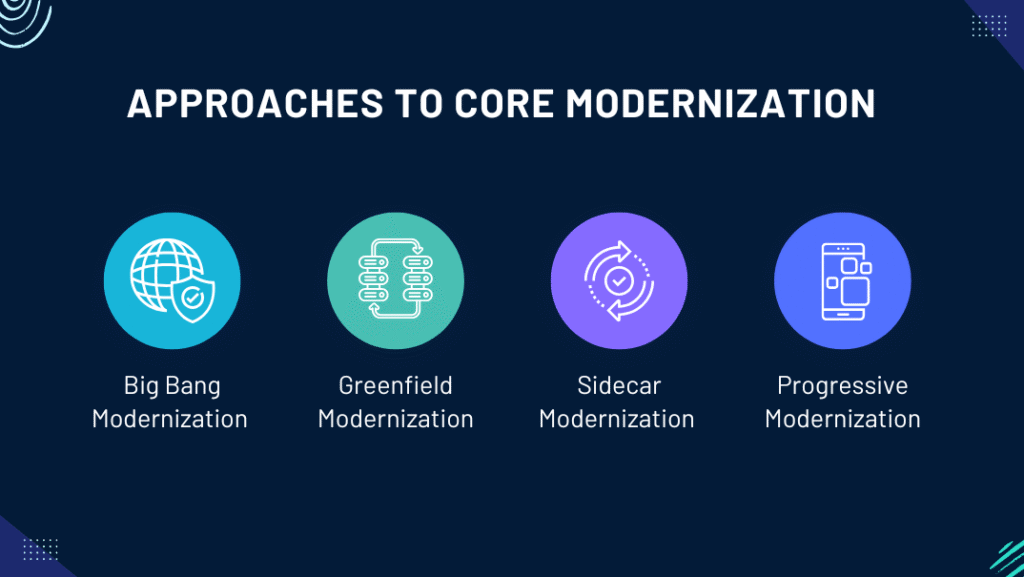
Approaches to Core Modernization
Organizations have several strategies available when modernizing their core systems, each offering different benefits depending on the company’s goals, resources, and risk tolerance. Choosing the right approach is critical for ensuring minimal disruptions while maximizing long-term success.
Big Bang Modernization
In this approach, organizations overhaul their entire legacy system in one major transition. All components—applications, databases, networks, and security—are updated simultaneously. While this approach offers the benefit of a fast transition to modern infrastructure, it is also high-risk due to the complexity of switching everything at once. However, companies that successfully execute a big bang transformation can achieve immediate results, enjoying the full benefits of modern systems with greater speed and scalability. This is suitable for businesses looking for rapid change and that can afford potential downtime during the transition.
Greenfield Modernization
A greenfield approach allows companies to build a completely new infrastructure from scratch while maintaining the existing legacy systems in parallel. This approach is particularly beneficial for organizations that need to test new platforms or technologies without disrupting their current operations. By running the old and new systems simultaneously, businesses can gradually migrate their data, applications, and services to the modern platform. This lowers the risk compared to a big bang approach, as it provides time for testing and troubleshooting before fully decommissioning the legacy system. It also allows businesses to innovate with modern technologies while maintaining business continuity.
Sidecar Modernization
Sidecar modernization introduces new features and functions alongside legacy systems. This approach increases agility by enabling businesses to add modern capabilities without having to replace the entire legacy system immediately. For example, new modules can be built using modern technology and integrated with existing systems, allowing businesses to enhance their services progressively. Over time, the reliance on legacy systems decreases as new functionalities replace older components. Sidecar modernization is ideal for companies that want to add incremental functionality while gradually reducing their dependence on outdated technology.
Progressive Modernization
Progressive modernization takes a phased approach, where components of the legacy system are modernized in stages. This steady transformation allows businesses to focus on the most pressing needs first, such as improving data processing, enhancing security, or upgrading customer-facing applications. By modernizing in stages, organizations minimize disruptions and spread the cost and effort of the transformation over a longer period. This approach is well-suited to businesses that operate in highly regulated industries or those with limited budgets, as it allows for continuous improvements without the risks associated with a full-scale overhaul. Additionally, this method gives companies the flexibility to adjust their modernization plans based on evolving business needs.
Choosing the Right Approach
Selecting the right approach depends on several factors, including the organization’s size, industry, risk appetite, and available resources. Companies with high risk tolerance and a need for immediate results may opt for big bang modernization, while those looking for more gradual advancements might prefer a sidecar or progressive strategy. Greenfield modernization is ideal for organizations that can afford to maintain parallel infrastructures and want to innovate while ensuring business continuity.
Each approach has its advantages and challenges, but the goal is the same: to modernize core systems in a way that aligns with business goals, reduces operational risks, and maximizes performance and agility. With the right strategy, companies can ensure a smoother transition and position themselves for future growth and innovation.
Key Principles for Achieving Core Modernization Success
Successfully modernizing core systems requires more than just technology upgrades. It involves a comprehensive strategy that aligns modernization efforts with business goals, minimizes risks, and ensures long-term scalability. By following a set of well-defined principles, organizations can navigate the complexities of core modernization and set themselves up for sustained success.
Here are five essential principles to guide your core modernization journey:
Align Modernization with Business Objectives
Modernization efforts should directly support business goals such as growth, cost reduction, or improved customer experience. It’s crucial to have a clear understanding of how modernizing your core systems will drive business outcomes and make sure the technology roadmap is closely tied to those objectives.
Prioritize Incremental Wins
While large-scale overhauls can be tempting, focusing on incremental enhancements allows for measurable progress and reduces risk. By modernizing in phases, organizations can demonstrate early wins, gain stakeholder buy-in, and continuously refine their approach as new challenges and opportunities arise.
Invest in Scalable Infrastructure
Core modernization is a long-term investment, so it’s important to choose technologies and infrastructure that can scale with your business. This includes selecting cloud platforms, automation tools, and security frameworks that are adaptable, future-proof, and capable of supporting evolving business needs.
Cross-Functional Collaboration
Successful modernization requires alignment across various teams, including IT, operations, and business units. By fostering collaboration, organizations can make sure that modernization projects meet technical requirements while also addressing operational challenges and business demands.
Plan for Continuous Improvement
Core modernization is not a one-time event but an ongoing process. Organizations should build flexibility in their strategy to allow for future updates and enhancements. Establishing a culture of continuous improvement ensures that systems remain optimized and ready to adapt to new technologies, market conditions, and customer expectations.
Adhering to these principles will help businesses modernize effectively and create lasting value.
Core Modernization for Banks
As industries evolve and competition intensifies, the need for core modernization becomes increasingly critical. The banking industry is one sector where this transformation is essential for survival and growth. As customer expectations evolve, financial institutions must adapt to remain competitive. Core modernization is vital for banks aiming to meet the increasing demand for seamless, personalized services in a rapidly changing landscape.
Fintech companies and challenger banks are capitalizing on cloud-based platforms to rapidly introduce new products and services, pushing traditional banks to adapt. Legacy banking systems are often slow, rigid, and unable to meet modern customer demands for seamless, personalized services.
For instance, mid-market regional banks, which hold around 30% of the market share, have been losing ground to larger institutions and nimble fintech startups. Modernizing core systems allows banks to provide faster, more customer-centric services, improving their competitiveness and attracting both new customers and talent. Banks that fail to modernize risk falling behind as their outdated infrastructure struggles to keep up with changing market conditions.
Challenges to Core Modernization
Core modernization comes with several challenges that businesses must navigate for successful transformation. These issues often arise from the complexity of legacy systems, the risks of large-scale changes, and the need to balance ongoing operations with innovation. Recognizing these challenges enables organizations to prepare effectively and address potential problems during the modernization process.
Complexity of Legacy Systems: Many organizations rely on intricate legacy systems developed over decades. These interconnected systems often lack clear documentation, making it difficult to identify dependencies and plan for modernization. This complexity can lead to unexpected disruptions during the transition.
Resistance to Change: Employees may resist new systems and technologies due to familiarity with existing processes or fears of job displacement. Overcoming this resistance requires effective change management, including training and clear communication about the benefits of modernization.
Resource Constraints: Modernizing core systems demands significant resources, including financial investment, skilled personnel, and time. Organizations may struggle to allocate these resources while managing ongoing operational demands, hindering the pace of modernization.
Integration Issues: Integrating new technologies with legacy systems can be challenging. Organizations must ensure new solutions work seamlessly with existing applications and workflows, which often requires specialized expertise, increasing costs and project duration.
Data Migration Risks: Migrating data from legacy systems poses risks related to integrity and security. Organizations must ensure that data is accurately transferred and protected during the migration. Any loss or corruption can have serious consequences for business operations.
By recognizing these challenges and proactively addressing them, organizations can better position themselves for a successful core modernization journey.
Successful core modernization is not just a technical upgrade; it’s a strategic initiative that demands a comprehensive understanding of an organization’s unique needs. Organizations should also prioritize establishing clear objectives and identifying the right technologies that can support their long-term vision. Investing in skilled technical expertise is important, as it can facilitate smooth transitions and mitigate risks associated with modernization efforts.
Additionally, partnering with the right provider, like Ahana, who has a deep understanding of the industry landscape, can increase the likelihood of success in the modernization journey. By approaching core modernization with foresight, organizations can position themselves for sustainable growth and adaptability in a rapidly evolving market.
Ahana is committed to supporting organizations as they pursue their modernization efforts. Our experience in guiding clients through this transformation has demonstrated the importance of a tailored approach that considers the unique needs of each business.
If your organization is ready to embark on this modernization journey, we invite you to reach out to us at Ahana. Let’s collaborate to develop a robust and adaptable infrastructure that prepares your business for future challenges and opportunities.
About Author
Manu Shrivastava
Sr IT Infrastructure Consultant, IMS – Enterprise
Cloud Subject Matter Expert with over 16 years of extensive experience in Systems Administration, Service Support, Technical Support, IT Project Management, and IT Infrastructure Operations. Expertise spans the entire lifecycle of cloud solutions, from design to implementation, solutioning, and presales, culminating in heading cloud practice initiatives.
Strong communicator and innovative team player with a track record of delivering complex IT projects. Demonstrated expertise in solution design and architecture for IT infrastructure, consistently driving efficiency and optimization in IT operations.
At Ahana, we are committed to building trust through transparency, security, and regulatory compliance. In an increasingly complex digital landscape, we recognize that our clients’ data is one of their most valuable assets. Our dedicated approach to compliance and governance ensures that this data is always protected, handled responsibly, and managed according to global best practices.
Our Standards
We follow industry-leading frameworks and regulations to maintain the highest levels of operational excellence and data security:
Process Excellence: Keeping to the standards prescribed by ISO/SEI CMM ensures that our processes are robust, consistent, and continuously improving.
Data Privacy & Protection: Keeping to the compliance prescribed by GDPR, DPDP, HIPAA, CCPA and other regulators help to ensure that we meet stringent global privacy and data protection requirements.
Our Approach to Data Security
We implement comprehensive measures across all our operations to safeguard client data:
Secure Operations: Advanced controls, monitoring, and auditing to protect sensitive information.
Privacy by Design: Embedding privacy considerations into every process, system, and application.
Risk Management & Governance: Regular assessments and governance protocols to mitigate risks and ensure compliance.
Employee Awareness: Ongoing training and awareness programs to ensure all team members understand and uphold our compliance standards.
At Ahana, compliance is more than a requirement—it’s a commitment to our clients, our partners, and our mission to deliver secure and reliable IT services worldwide.